When to Visit East Africa
East Africa runs on two broad rainfall patterns and understanding them is key to planning a trip across Uganda, Rwanda, Kenya, and Tanzania. Most Kenya and Tanzania safari destinations are at their best between January and the end of March, and again from June to October, when the climate is mild and dry. Uganda and Rwanda follow a similar rhythm, with two dry seasons of their own, roughly December to February and June to September, when gorilla and chimp trekking conditions are at their best, though light rainfall can still fall at any time of year in parts of the region without significantly disrupting the wildlife experience. Across all four countries, the dry months bring thinner vegetation, clearer skies, and wildlife clustering around rivers and waterholes, making game viewing easier and more reliable, while forest trails in Bwindi and Volcanoes National Park become firmer and far less muddy underfoot.
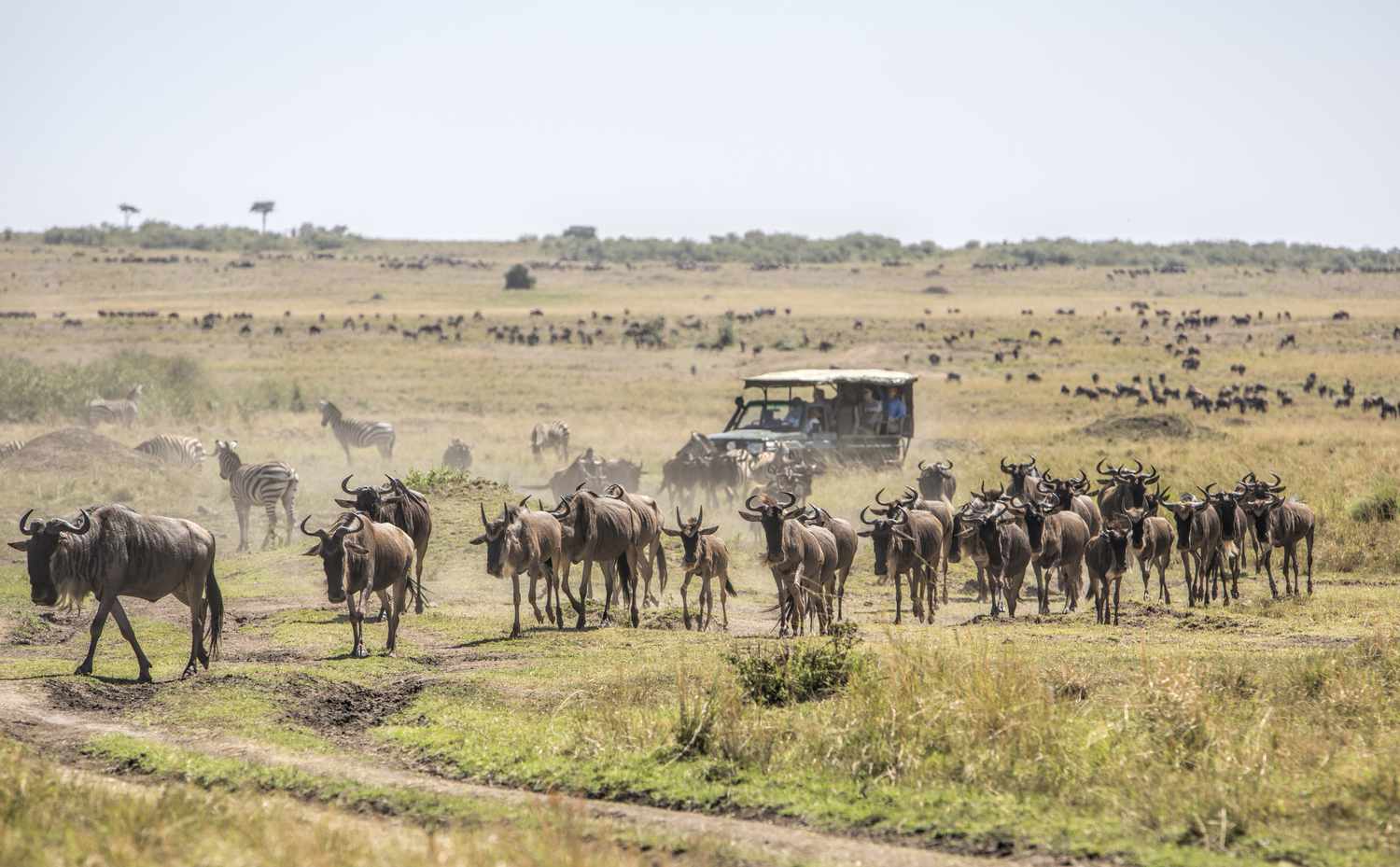
June to September is widely considered the classic safari and trekking window across the region. In Rwanda and Uganda, this period brings some of the best gorilla and chimp trekking conditions of the year, as drier trails and improved forest visibility make hiking noticeably easier. This same stretch marks the start of peak safari season in Kenya and Tanzania, with July and August often the busiest and most expensive months to visit. September in particular is an excellent wildlife-viewing month across East Africa, as the dry season reaches its peak and the wildebeest migration enters its most dramatic phase, with the famous Mara River crossings visible in both northern Tanzania and Kenya's Masai Mara.
December to February offers a quieter, equally rewarding alternative. This period covers Uganda and Rwanda's second dry season, making it another strong window for gorilla trekking, while Kenya and Tanzania also see good, drier conditions running into March, along with the added draw of newborn wildlife and excellent photography light. February in particular is a strong month for witnessing the Great Migration in its calving grounds in the southern Serengeti, and travelers often combine a Tanzania safari with a short Uganda add-on for primate trekking during this window.
The rainy seasons, roughly March to May and October to November, are considered the region's low season. Kenya and Tanzania see heavy rains during March, April, and May that can make some roads difficult to navigate, while Uganda and Rwanda experience their long rainy season from March through the end of May. October also marks the start of Uganda and Rwanda's second rainy season, even as conditions remain good in most of the rest of East Africa. These wetter months bring fewer tourists, lower prices, and lush, vivid scenery, making them worth considering for travelers less concerned with muddy trails and more interested in value and solitude.
For the Great Migration specifically, timing depends on location within the ecosystem. The dry season from May to October is generally the best all-round window, as sparse vegetation and animals gathering at water make wildlife easy to spot. River crossings are best sought between July and October, while the calving season, with newborn wildebeest across the southern plains, peaks between January and March
 R & M Wild Safaris